

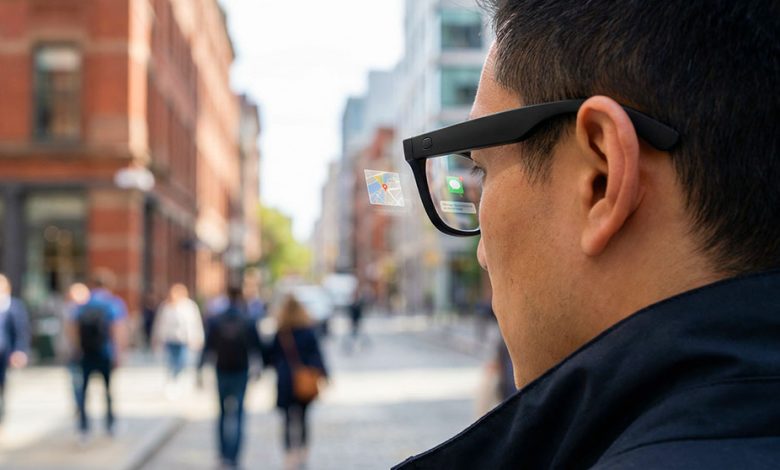
Forget about VR headsets. These days, AI glasses are the most popular wearable gadget.
According to market research company Omdia, shipments of AI glasses like Meta’s Oakley and Ray-Ban versions around the world grew by 322% from 2024 to 2025, reaching 8.7 million units.
China played a big role in the rise in shipments. The country launched a lot of new products, brought in new companies, and used aggressive pricing methods to take 10.9% of the global AI glasses market, making it the second-largest market after the US.
According to Omdia Senior Analyst Qiran Ju, Chinese companies tend to make AI glasses with displays that are supported by a unique go-to-market strategy.
He said, “The integration of displays opens new applications that fit with how people use them, as vendors make products that appeal to people all over the world, which leads to rapid growth.”
AI Glasses Are Gaining Momentum
Mark N. Vena, president and main analyst at SmartTech Research, a technology consulting firm in Las Vegas, said, “The category finally moved from science project to something people can actually imagine wearing in public.”
He said that the gadgets were becoming more popular because of improvements in multimodal AI, lighter designs, longer battery life, and the appeal of hands-free photo, video, translation, and assistant services. These changes made AI glasses an actual consumer product instead of just a futuristic showcase.
He told TechNewsWorld, “Omdia says shipments hit 8.7 million units in 2025, up 322% from 2024. This shows that this market has gone past curiosity and into momentum mode.”
Rob Enderle, president and chief analyst at the Enderle Group, an advisory services firm in Bend, Ore., said that multimodal AI changed the game. He told TechNewsWorld, “It changed the shape of the glasses from simple audio glasses to seeing glasses.”
He said, “Users can now ask their glasses to translate menus, find landmarks, or summarize documents in real time.”
He also said that the glasses are drawing in those who make content. He remarked, “Features like high-resolution 3K video and instant social media streaming have made these a ‘must-have’ tool for digital creators.”
He went on to say that AI glasses are also giving people a distinct feeling than older smart glasses. He said, “Smart glasses used to be big and hard to wear in public.” “Modern AI glasses, like the Ray-Ban Meta, look like regular glasses, which gets rid of the ‘glasshole’ stigma.”
Privacy Concerns Remain High Jennifer Kent, senior vice president and principal analyst at Parks Associates, a Dallas-based market research and consulting company that focuses on consumer technology products, said that her company’s research shows that people want AI tools to provide very useful benefits, like translation and technical support.
“AI glasses’ ability to translate in real time is helpful for travelers, people who don’t speak the language well, and people who live in places where many languages are spoken,” she told TechNewsWorld.
Kent went on to say that Parks discovered that people were more eager to volunteer information in emergencies or to make them feel comfortable and secure. She thought that “smart glasses could have a market for lone workers or workers in dangerous situations to combine video capture and emergency support.”
She did say, though, that people are really worried about AI’s effect on their privacy and safety. “Seventy-two percent of people who have internet access in the US are worried about the privacy and data issues that AI could cause, and 71% are worried about society’s ability to control AI and use it responsibly,” she said.
Michael Bell, CEO of Suzu Labs, a company that offers AI-powered cybersecurity services in Las Vegas, said that people who wear AI glasses should be very worried about their privacy.
He talked about a Swedish inquiry that found that Meta feeds video to human data annotators at Sama in Nairobi, Kenya. Those workers said they had to watch videos of people taking off their clothes, using the restroom, and having medical appointments. One worker told reporters, “We see everything, from living rooms to naked bodies.” Meta says that face-blurring filters are used before a person looks at the photos, but workers allege that those filters often don’t work.
Risks to Security “The problem goes beyond Meta,” Bell told TechNewsWorld. “We looked into Even Realities, a Chinese-made alternative that the tech press has been touting as privacy-first because it took out the camera. No one said that the parent business is Shenzhen Yiwen Technology in Shenzhen, China, and that it is wholly sponsored by Chinese venture capital.
He said, “The glasses have four microphones that are always on and send voiceprints and audio recordings to third-party providers that the privacy policy won’t name.”
“The Chinese parent can see user data because of the policy’s own affiliate rules, and that parent is also subject to China’s National Intelligence Law.” So, the “safe” alternative to Meta’s camera is a microphone array that is always listening and is channeled through a corporation that a foreign intelligence service may force to do what it wants.
He stated, “With 8.7 million units shipped worldwide, the regulatory conversation needs to move beyond whether there should be a recording light and start looking at the whole data pipeline behind these devices.”
Bell said that the number that stood out to him in the Omdia data was the display-equipped section, which had 730,000 units, with Chinese companies making up 71% of that market. He said, “Display glasses need more advanced AI integration, which means more data processing, more cloud connectivity, and more audio going through third-party pipelines.”
He went on, “The race to build the best AI assistant is about who can do it the fastest, and that race encourages collecting more data, not less.” “Meta has 85% of the overall market, but the fastest-growing parts are being built by companies in mainland China that have to work with state intelligence agencies because of the law.”
He said, “We went through something like this with Huawei and telecom equipment.” “Smart glasses with always-on microphones and AI processing are a similar attack surface, but no one is treating them that way right now.”
Market Growth Speeds Up
Meta owns most of the global market for AI glasses, even though the market for them is quite hot in China. Omdia says that Meta’s AI glasses shipments reached 7.4 million units, a growth rate of 281.3%. This was thanks to the strong sales of the Oakley and second-generation Ray-Ban-branded AI glasses and Meta’s efforts to expand into new markets like India, Mexico, Brazil, and others.
Tim Bajarin, president of Creative Strategies, a technology consulting firm in San Jose, California, said, “Meta has led the way by being the first to add camera features, great audio, and more AI functions.”
He told TechNewsWorld, “It has also built a strong platform for third-party software and a strong roadmap that includes smart glasses with in-view video, like they did with Meta Ray-Ban Display glasses.”
He further said, “This market will keep growing and getting bigger, especially at the end of 2026.” “However, I think that if Apple releases smart glasses later this year or early next year, it will create a huge demand for them, probably in 2027.”
Omdia predicted that more than 15 million pairs of AI glasses will be shipped around the world in 2026. It said that growth will come from big tech companies and device makers entering the market, Meta growing output and moving into new areas, and smaller companies in India, Japan, and South Korea gaining ground.
Jason Low, the director of Omdia Research, said in a statement that the competitive terrain is changing quickly. “Meta’s early success was due to relationships with brands and strong integration of AI. Ecosystem integration will become more important as more people join the game.
He went on to say, “The winners will be those who can seamlessly integrate AI glasses into broader device ecosystems — connecting glasses with intelligent devices, user environments, and services in ways that deliver genuine utility in users’ connected lives.” “Companies that can successfully use AI agents in AI glasses could change how people talk to each other at work, get help with everyday tasks, and keep an eye on their health, while also opening up exciting new ways to make money.”