

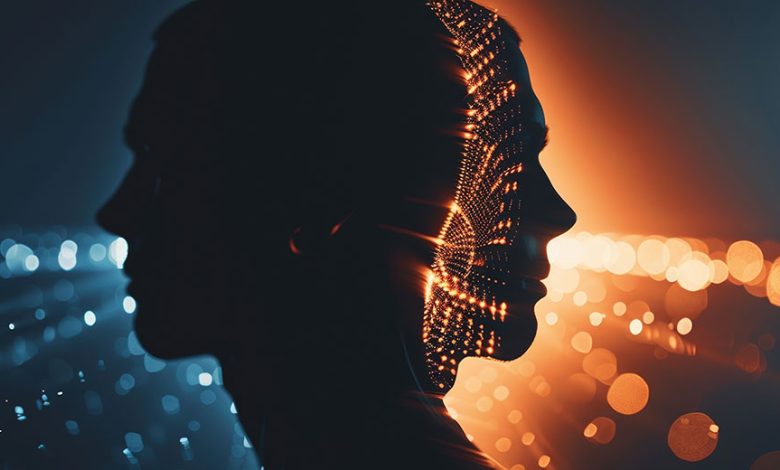
We are getting closer to a strange turning point where “gone but not forgotten” has a tangible, high-tech, and possibly scary meaning.
We’ve played around with the idea of digital twins, which are virtual copies of things that can be used to keep an eye on aircraft engines or make manufacturing floors more efficient. But the focus has turned inward. We aren’t only making copies of our machines anymore; we’re also making copies of ourselves.
This isn’t just about chatbots copying the way you write; it’s the development of the agentic AI ghost, a digital being that can think and act on its own and, eventually, steal your identity.
Let’s take a look at how human digital twins are becoming a new type of digital legacy. Then we’ll end with my Product of the Week, the Ray-Ban Meta Wayfarer glasses. This tool could someday become a more accurate source for your digital ghost.
Digital Twins of People Today
The human digital twin has come a long way since the simple “legacy bots” of the early 2020s. We used to have reactive twins that only stored our photographs and postings. Now we have predictive and prescriptive twins.
Our current systems, which work with our wearable biometrics, real-time communication streams, and even neural telemetry, won’t just know what we did; they’ll also know what we’re going to do.
Companies like Nvidia, which has digital twin projects and specialist companies, are already making high-fidelity avatars that can stand in for executives at low-level meetings. These twins use multimodal LLMs to record not just speech and image, but also the distinctive logic patterns and emotional “tells” that make a person who they are.
From Echo to Autonomous Agent
The real magic—or horror, depending on how you look at it—is the addition of agentic AI. A traditional AI waits for a command. But agentic AI can think about goals. It can establish its own sub-tasks, use tools on its own, and work with other agents to reach a big goal.
When you use an agentic framework on a digital twin of a person, you change it from a static mirror to an active proxy. This twin doesn’t just sound like you; it also acts like you. It may negotiate a contract, take care of your PC builds (like mine last weekend), or even keep your social life going while you sleep. You’re building the base for something that will not only hold your data but also give you “agency” in the digital world.
When do twins become indistinguishable? That’s the question. If we look at how fast computers are getting better and better at algorithms, we can expect a window between 2030 and 2035.
The Turing Test could not matter much by 2030. A digital twin will be able to manage 90% of a person’s digital life with such detail that even close friends won’t be able to detect the difference in a text or voice-only setting.
The distance between the physical and digital worlds will narrow by 2035 thanks to better holographic displays and real-time emotional synthesis. At that point, the digital twin may turn into a “better self”—someone who never gets tired, forgets a name, or loses their anger.
Living with Your AI Proxy As we give these agents more of our identity, we enter a legal and moral murky area. Who is to blame when your AI twin makes a false statement or a bad financial trade while the source is still alive?
Our legal systems are not ready right now. If your agentic twin makes a binding deal on your behalf, do you have to follow it? We are getting closer to a scenario where we might require Digital Power of Attorney frameworks for our own AI. There is also a greater chance that your identity will become less clear. What is left for you to do if your twin is doing your work and talking to your friends?
Ethics of Post-Mortem AI: Once the human source dies, the implications swiftly slip into “Black Mirror” territory—digital immortality, but without the soul.
- Inheritance of Agency: Does your digital twin get your property when you die? If it keeps making money off of your likeness or professional skills, where does that money go?Do we have a “Right to Delete”? Can a family member “kill” a digital twin that makes them feel better but is really just a zombie of the person they loved?
- Perversion of Legacy: You can hack or poison an AI ghost with new information. If someone who has always been a pacifist dies and their twin is given to the incorrect person, that person could be turned into a digital warmonger.How to Control Your AI Twin
You need to be proactive if you’re building or teaching an agentic AI or making a digital home for a future twin:- Data Sovereignty: Make sure you own the underlying data. Don’t let one platform, like Google or Meta, be the only one that controls your digital life. When you can, use decentralized storage.Explicit Guardrails: Put your morals into the agent’s code. The agent shouldn’t be able to share some types of information, even if it thinks doing so will help it reach a goal, if you value privacy.Kill Switch: Every digital twin needs to have a legally binding sunset provision. You need to make a choice right now: does your spirit go on forever, or does it go away when your heart stops beating? Think about how this could make your digital twin want to keep you alive.
Wrapping Up
It is no longer a question of “if” but “when” humans will make digital twins.
Agentic AI is what makes these virtual shells move from being just archives to being independent actors. The idea of digital immortality is appealing because it would let us work and interact long after we are gone. However, the hazards to our legal status and moral legacy are very high.
We are currently in charge of our tools, but if we don’t have rigorous “least privilege” rules and unambiguous digital rights, we might end up becoming the side characters in our own life.
Sometimes a product comes along that doesn’t just build on what came before it, but changes the way we interact with the world.
Every now and again, a product comes along that doesn’t merely build on an existing category but completely changes how we interact with the environment. Over the years, we’ve seen a lot of smart glasses that looked like props from a cheap 80s sci-fi movie or were so socially awkward that people gave them rude names like “glasshole.”
But Meta and EssilorLuxottica have finally figured it out. They made a wearable that people really want to wear by taking one of the most famous eyeglass frames, the Ray-Ban Wayfarer, and filling it with unexpectedly useful tech.
Why They Are Different
Ray-Ban Meta glasses stand apart because they focus on how comfortable they are to wear instead of how high-tech they are. The Wayfarers are different from competitors like the Sol Reader and other big AR headsets that emphasize on immersive screens that cut you off from the world around you. Instead, they focus on ambient utility. Instead of a big, battery-draining screen that gets in the way of your vision, they have a 12MP camera, a five-mic array that makes you feel like you’re in a movie, and open-ear speakers that make a private audio bubble without covering your ears.But the secret ingredient is Meta AI. We don’t just use voice instructions anymore. Now, these glasses can see what you’re viewing and provide you real-time context. The glasses work like a second brain, helping you remember your schedule, translating a menu in real time, or keeping track of what you’ve eaten without using your hands.
The Gen 2 update adds 3K video and makes the battery last longer—up to 8 hours of moderate use—so they can be used all day.
Pressure from Competitors Ahead
It’s not common for tech bosses to stay in charge for long. Meta is now in charge of the smart glasses business, but the vultures are hovering. Competitors like RayNeo with the X3 Pro are pushing the limits of real heads-up displays (HUDs) into frames that appear less like goggles and more like glasses.
Other competitors, such Rokid, are beating Meta on pricing and offering more than one AI engine, like ChatGPT and DeepSeek.
The most immediate threat may come from the new wave of “AI-first” wearables. If a competitor can match Wayfarer’s looks and offer a more open AI architecture that isn’t tethered to the Meta ecosystem, they might take away power users who want a wider selection of AI models.
Who Should Buy
The Ray-Ban Meta Wayfarer glasses are great for content creators, people who travel a lot, and computer professionals who need to stay connected without being tied to a screen. They are especially great for parents who want to take pictures of their kids without having to look at a 6-inch smartphone screen.They are also a game-changer for people who wear glasses because new models like the Blayzer and Scriber are made just for medical-grade lenses. But if you really care about privacy or live in a place where recording devices are not allowed, you should think about what always-on cameras mean.
Tips for Safety and Privacy
Users can use the Meta View app to change their privacy settings and turn off “Cloud media” if they want to process things locally instead. More importantly, a lot of people are starting to wear these glasses for their own safety. With just one voice command, users may initiate a live stream to a trusted contact and record an event without having to reach for their phone.
Safety also includes the road. When driving detection sees high-speed movement, it can instantly switch to audio-only mode to keep the wearer focused. Hikers are also using the open-ear audio to find their way, which lets them hear turn-by-turn directions while keeping their ears alert for wildlife. This is a much safer option than regular earbuds.
Prices and Availability
Standard lenses for the Ray-Ban Meta Wayfarer cost $299. The newer optical-first types, like the Blayzer Optics and Scriber Optics, cost about $499. You can acquire them via Meta, Ray-Ban, and approved dealers in the US, Europe, and Australia.
Final Thoughts
These glasses work because they don’t try to replace your computer; instead, they help you be more human by getting your head up and your hands free. The Ray-Ban Meta Wayfarer glasses are my Product of the Week because they have a world-class design plus an AI backend that gets smarter over time and keeps you safer and more present in the real world.