
A lot of people think that chips are the key problem, however supply is not the main problem. The most important problem right now is how to power and cool equipment on a large scale.
You won’t be able to manage the AI economy just by controlling the GPUs. The processors are very significant, yet the availability of computers is not a big problem for growth. Operators need to be sure that the infrastructure can provide power, cooling, and reliability on a large scale. Right now, a lot of markets don’t provide the energy and reliability that are needed.
This change from compute to energy limits is already having an effect on corporate results. Timelines are changing, money is being spent on projects that aren’t moving forward, and in this environment, getting power has become a major competitive edge. Your sophisticated model is useless if you can’t provide electricity and run the center efficiently, no matter what it looks like.
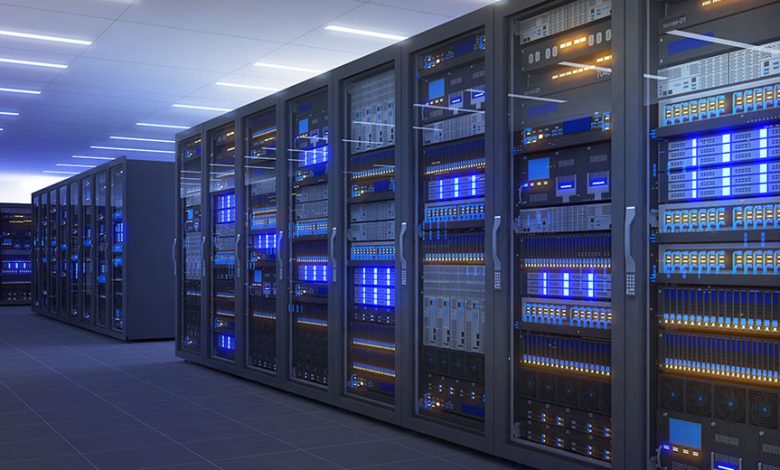
Because GPU clusters demand 30–60 kW per cabinet, the requirements for data center design have altered. Facilities that were developed only five years ago may not be able to handle the constant load and heat production that is needed today. You can have all the high-quality chips you want, but if a facility isn’t ready for them, the silicon below doesn’t matter.
AI Timelines Depend on Infrastructure
Physical limits, not financial or demand-side issues, are what are slowing down growth. The main concern is that a facility can’t get adequate power. Substations might assist, but new buildings are years behind schedule. It’s typical for crucial equipment to be on backorder. It’s not unusual for an AI deployment that has all the money it needs to hang about waiting for infrastructure that might not be ready for two years.
These kinds of delays have a direct effect on business results. In this case, the time to market is lost. AI models need to be trained and put to use. If that can’t happen on time, the return on investment (ROI) gets pushed back even more. When facilities take longer to come online, projected returns get smaller. The first person to solve these problems will take over a market that is stuck. This means that AI can only work if the infrastructure is ready.
Power Is the New Competitive Advantage The U.S. data center power demand is expected to rise a lot, mostly because of AI workloads. The Electric Power Research Institute (EPRI) says that by 2030, data centers might get 9% to 17% of all electricity generation, which would be twice as much as they generate now.
The size of the problem is very big. But the plans for the grid expansion needed to support this development are on a different schedule: it takes less than two years to build data centers. It can take ten years or more to build and run big power plants and transmission lines.
The main factor that decides where AI infrastructure can be put in place is no longer land or money; it’s rather location, specifically access to available power. This restriction is now the most important thing for site developers.
Supply Chains Increase Project Risk
Equipment availability is another important aspect, just like power needs. Now, it often takes more than a year to get transformers, switchgear, UPS systems, and cooling infrastructure. People no longer see this as a short-term problem; they see it as the product of ongoing demand. Hyperscalers, colocation providers, and corporate operators are all growing at the same time.
In these circumstances, the usual sequence of action for building data centers has changed. Before, the procedures were design, procure, and then build. Now, developers have to lock in equipment orders earlier. Even if the designs aren’t finished yet, equipment is ordered to make sure there’s a position in the supply chain queue.
Ordering equipment before the plans are finished adds extra risks because it means committing money earlier. This makes it less flexible. If the design assumptions and the supplied equipment don’t match up, it could cost money to fix the problem. In a market that moves as quickly as AI, the delays are not only annoying; they also cost money.
Cooling Is a Major Problem
After power and supply chain problems, cooling is the next big problem. Today’s high-density GPU racks create too much heat for traditional air-based systems to handle. Hot spots that form quickly put a load on equipment and increase the chance of failure. UPS infrastructure was built to be strong, but in these thermally strained conditions, it can become a problem.
This is the text center for the cls-1777705270.
Advanced cooling solutions are now required, not just suggested. Liquid cooling, hot-aisle containment, and direct-to-chip solutions are examples of methods that were formerly thought to be experimental but are now standard. To cut down on conversion losses and meet cooling needs, researchers are looking into new power-distribution models, like higher-voltage direct-current topologies.
Your ability to power and cool your AI now determines how ready you are. It won’t be enough to just retrofit old buildings. In a lot of cases, it entails rethinking the whole infrastructure stack.
Power-First Strategy
The power-first model is changing how things are made. Power is no longer merely a part of a bigger endeavor; it is now a top priority. The final result is a paradigm that makes developers find utility partners earlier, find sites with existing or extendable grid capacity, and sometimes even add on-site generating to cut down on their reliance on outside infrastructure.
The timelines for the projects have also been changed. We need to have the equipment sooner. Modular construction has been added to speed up deployment. Co-planning expansions with utilities is becoming more and more important, instead of waiting for capacity to become available. These changes together show a big change in how people think about and build data centers.
What This Means for AI Business
It’s evident to investors that infrastructure risk is now business risk. It is no longer a good idea to assume that capacity will be available when you need it. When designing cycles, you need to think about the availability of power, the timings of the supply chain, and the cooling needs.
These infrastructure limits must be taken into account while choosing a vendor, making a site plan, and choosing a deployment approach. Projects that solve all power and cooling problems early on will have a clear edge.
AI is making it necessary for digital infrastructure and physical energy systems to work together. Data centers are no longer thought of as places to store data or as IT environments; they are now considered as important parts of larger energy ecosystems. In a lot of ways, they are starting to seem more like utilities than traditional infrastructure.
Infrastructure Will Decide AI Winners
AI won’t grow just because of models and processors. Infrastructure will instead control these technologies on a large scale. Power, cooling, and supply chain resilience are currently the most important things for an AI project to succeed or fail.
Companies who understand and accept this new reality will be able to move faster, deploy sooner, and get more value from the market. People who don’t will risk falling behind in a market that is becoming more and more defined by how ready the infrastructure is.
In the race to scale AI, the people who can run the greatest algorithms may not be the ones who have the best algorithms.